
It’s 16 March 1989, the dying embers of Margaret Thatcher’s premiership, still backed by a large Tory majority. The prime minister is about to launch perhaps her most controversial attempt to roll back the state: the selling off of water companies.
Opposite her in the House of Commons despatch box is Labour leader Neil Kinnock, struggling to grasp how the prime minister could think that taking the water authorities away from public control could possibly result in an improved service.
Thatcher, in that familiar low, steady tone, is clear eyed, as she tells MPs: “A privatised water supply is very much more efficient than a public organisation… It will result in a better deal for the consumer.”
Liberal Democrat leader Paddy Ashdown then stands up. He describes the idea of privatising water as “balderdash and bunkum.” Unusually animated by the comment, Thatcher, now with a hint of displeasure in her voice, says: “It will be very much better for the environment. That is the message”.
The wheels are in motion.
‘It should never have happened’
Speaking to the Cable in July this year, Kinnock explains how Labour “repeatedly warned quality and safety of supply would take second place to the prospect of profit from a service which, by obvious definition, is a public health necessity.”
For the best part of 80 years, this was the Labour Party position. But after removing Clause 4 from their manifesto in 1995 – which committed to mass nationalisation and common ownership – the party, with Tony Blair at the helm, endorsed privatisation: selling off children’s homes, parts of the NHS and sections of the London Underground.
Kinnock’s opinion is as clear today as it was in 1989: “It should never have been put into private commercial ownership.”
But it was. As England and Wales’ 10 regional public water authorities fell into private ownership, shares were sold on the cheap, Public money – known as the “green dowry” – was injected into the companies. And around £5 billion of debt was written off.
This meant no extra money went to the Treasury and for over 50 million people water was now a commodity, at the mercy and the whims of the stock market.
Wessex Water, the regional firm that covers the Bristol area, floated on the stock exchange for nine years before American corporation Enron bought it for $2.4 billion (£1.3 billion) in 1998. Within three years the corporation was charged with fraud, had to file for bankruptcy and needed to sell.
After a huge scandal involving corporate corruption in the early 2000s, Enron became a byword for systemic white-collar corruption.
Debt, bonuses and an OBE
So Wessex Water changed hands again in 2002. This time it was bought by Malaysian multinational YTL Power for $1.77 billion (£1.2 billion).
They say they’re taking our sewage away. It’s misleading . Some days, they just let it go straight into the river
Tom
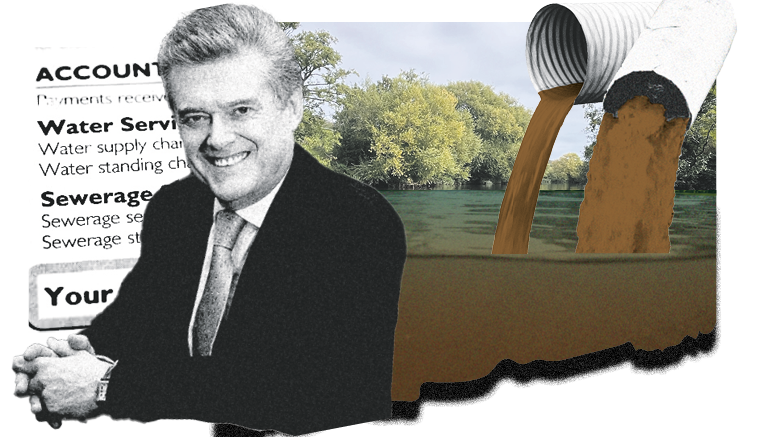
The deal was the subject of more controversy, after it emerged Wessex Water CEO Colin Skellett received a £1 million payment during the takeover. He was investigated for bribery but was cleared two years later with the money found to be payment for his consultancy services.
Skellett’s tenure as Wessex’s CEO lasted 36 years, from 1988 to 2024. He oversaw dividends of over £4.25 billion being paid to shareholders and the company’s debt grew to over £2.6 billion.
In 2012, he was awarded an OBE for services to business and the charity Wateraid. In 2024, his final year with Wessex Water, he received a £170,000 bonus. This was despite high polluting water companies, including Wessex Water, being banned from giving bonuses to bosses at the time.
However, he was allowed to keep the money because it apparently related to a different part of YTL’s business: real estate. The company’s property portfolio includes the Brabazon neighbourhood in Filton and the 20,000 capacity Aviva Arena, set to open in 2028.
As debts, dividends and bonuses have increased, so has the amount of sewage being discharged into our waterways. Last year, Wessex Water dumped sewage into rivers, lakes and sea from sewage discharge points across southern England for a total of 187,163 hours. That’s the equivalent of 21.66 years of continuous dumping.
Then in August of this year, the company announced they were going to increase water bills once again in 2027. By the time they announced this increase, they had already dumped more sewage into our waterways than during the whole of 2025 (even though there was still over four months of this year left). Some people have had enough.
Straight into the river
“We can’t just keep paying them money if we don’t agree with what they’re doing,” says Tom. He currently owes Wessex Water £2,167.88 after he decided to start withholding payments to them back in December 2021.
The company has since used three debt collection agencies – Searchlight Collections, Westcott and now Advantis – to try to recover the money. At times, these agencies have rung Tom multiple times a day, but never has a human actually been on the other side of the phone. “It’s always just a robot,” he tells the Cable.
After a few months of ignoring their calls and attempting to block their numbers, the agency would give up and send Tom a letter which read: “As you have not paid us, we’re transferring your debt back to Wessex Water.” Then the whole cycle started again.
Tom decided to withhold payments from the company in protest at the sewage it has allowed to flow into the River Frome, which runs past his house in Easton. He explains how, at first, when you stop paying, the company sends you a bill, then you get a final reminder that demands you pay within 10 days to avoid further action.
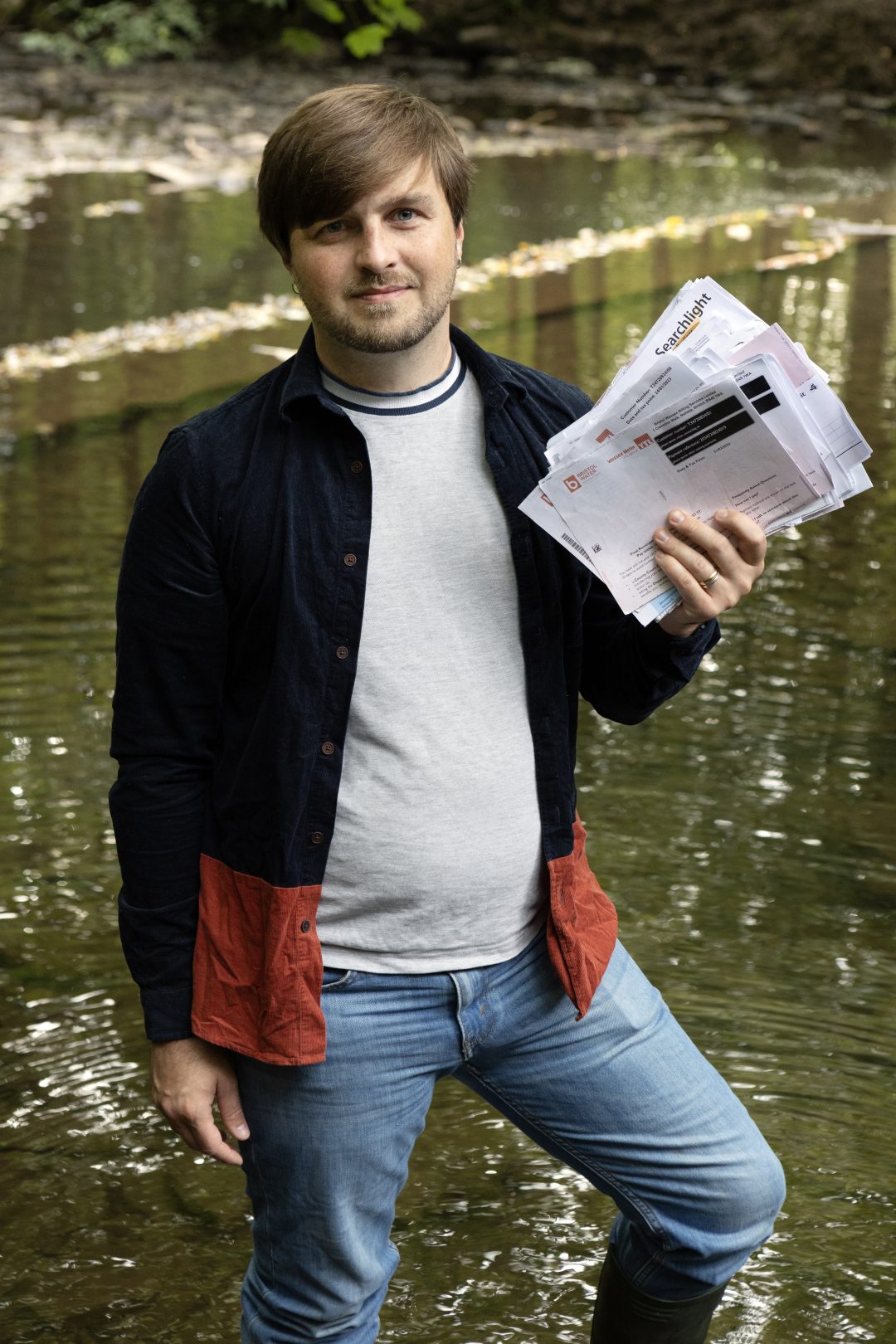
Tom tells the Cable that he wants to avoid further action and is willing to pay the company for its services on the condition they agree to reduce his bill for the days in which they haven’t processed sewage in his local river.
According to Tom, the company’s leaflets say “every day we take away your sewage to process.” He feels that’s misleading. “It’s not every day. Some days they don’t take away your sewage, and others they just let it go straight into the river,” he explains.
Bristolians receive water bills from either Wessex Water or Bristol Water or a combined bill from both companies. This is because Wessex Water is responsible for Bristol’s sewerage, drainage and wastewater treatment services, while the city’s drinking water is supplied by Bristol Water. This has been the case long before the privatisation of Wessex Water in 1989.
Last year, 5,794 hours of sewage was dumped into the Frome by Wessex Water. Much of this sewage would have been discharged through storm overflows.
Storm overflows are relief valves built into the sewage system that discharge excess sewage and rainwater into waterways when the system is under strain. They are only supposed to be used in extreme weather, but for many years they’ve been used routinely, in some cases even discharging on dry days.
Tom doesn’t believe Wessex Water has taken proper action on storm overflows. He thinks the company has simply started monitoring them better – “now they know exactly how much shit they’re putting into the rivers” – rather than actually investing in improving infrastructure or performance.
The upstream fight against sewage
In 2024, Bristol-based Charlotte Sawyer released the film Rave On for the Avon which follows activists in the city as they fight against sewage pollution and campaign for official bathing rights in the Avon.
Charlotte tells the Cable that the documentary shows just how important the river is to Bristolians. “Even though people know the water’s not that clean, they still come to it,” she says, pointing to the multiple popular wild swimming spots on the river.
Everybody has a story of being sick or knowing someone who has been sick after swimming in the Avon
Charlotte Sawyer, film director
In one of the film’s most memorable scenes, Tom, going by the alias of ‘The Otter’ at the time, meets a Wessex Water operations manager in a cafe to discuss the company’s environmental responsibilities.
The meeting is gatecrashed by three members of Conham Bathing – a group of wild swimmers who campaign for cleaner water quality and monitor bacteria in the Avon – as well as Charlotte herself.
There are several tense moments. Firstly, when the manager claims that there is “no aspiration from the Department of Food and Rural Affairs (DEFRA), the Water Services Regulation Authority (Ofwat), the Environment Agency or water companies to make our rivers clean enough for swimming.”
Emma Nicol, one of the Conham Bathing group members who was in that meeting, tells the Cable she thinks the representative was passing the blame, trying to act as if his company couldn’t be challenged on this.
She believes Wessex Water has the power to make our rivers healthier but “it would mean actually investing and changing the way they operate.” This, she says, “would come at a cost that would be voted down by shareholders.”
A particular point of contention during the meeting is when the representative says customers are getting a “full service” from them. Emma feels strongly that a “full service” would mean that our rivers were flowing free from pollution.
After watching the clip again, Emma notices her “voice wavering slightly’’ as she challenges the Wessex Water representative, who tries to tell the group “that wildlife can shrug off the bacteria [caused by sewage pollution]”.
Emma is still outraged by this comment because she has seen sewage fungus growing near outfalls along the Avon. She explains that this is a flagrant disregard for the very ecosystems which are instrumental to our survival, and highlights how excess nutrients in our waterways can have catastrophic effects on our rivers from toxic algal blooms to hypoxia (starving the river of oxygen).
Everybody has a story
It’s no surprise then that Charlotte says, “everybody has a story of being sick or knowing someone who has been sick after swimming in the Avon.” The Cable reported on swimmers getting sick back in 2021, due to the high levels of untreated sewage and E.Coli in the River Avon. In 1999, eight-year-old Heather Preen died after contracting the dangerous infection following a visit to a beach in Devon.
In Rave On For The Avon, the operations manager then takes the activists on a tour of some of the sewage overflow sights around Easton. What the documentary doesn’t show is how he later puts on Wellington boots and tries to show the group a discharge point where the various sewage overflows should join a stream in Greenbank Cemetery.
It soon becomes clear to Tom that the manager has no idea where it is. “It was all overgrown and had clearly not been checked in a while,” says Tom, who adds that the manager spends around 20 minutes “bashing through nettles… trying to guess where it might be.” He eventually just gives up.
“It shows that nobody’s been down there for ages,” Tom says. He argues that Wessex Water employees don’t know where all of their infrastructure even is.
“When water was privatised, [Wessex Water] got the keys to the city and they just sat on this infrastructure,” Tom says.
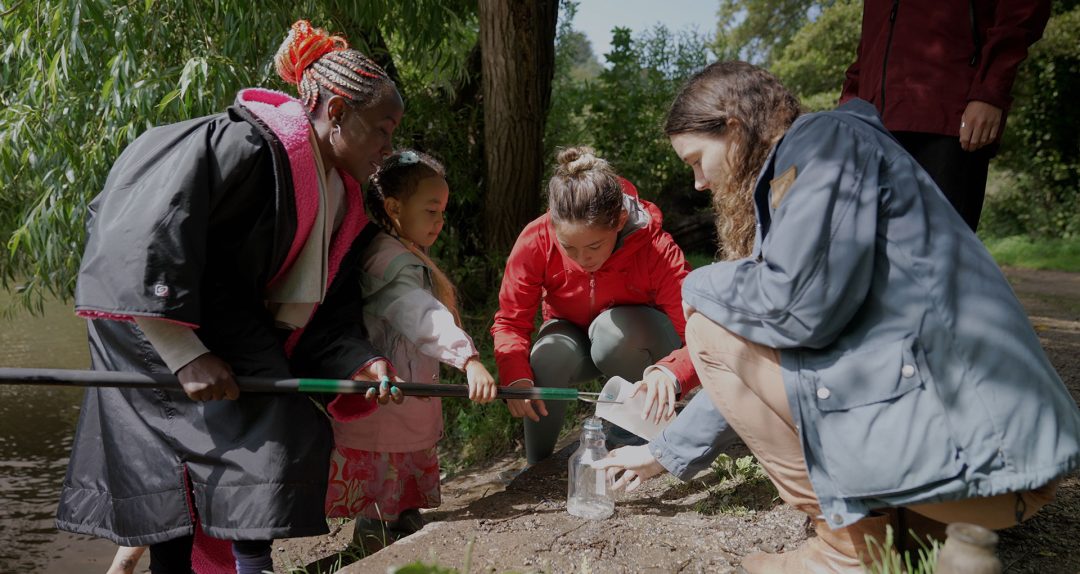
He feels this feeds into a narrative water companies often try to push: they make people believe that in order to stop sewage being pumped into our rivers, “they’d need to rewire every home in the country… As if the problem of sewage in our waterways is the result of a Victorian plumbing system.” A plumbing system which former CEO Colin Skellett has said would cost around £10 billion to replace.
During the tour, Tom remembers the manager pointing out some unused land nearby. He explains that if Wessex Water “just bought that and put a big tank on it.. they’d probably reduce the number of storm overflows here quite a lot.”
The meeting was ultimately set up to dissuade Tom from continuing his protest, an example of Wessex Water trying to “put on a friendly face to campaigners”. But for Tom, the water company was “too cocky.”
He says: “They do perform relatively well in the league tables of water companies but that doesn’t say much. It’s a low bar… They felt they could just talk me out of it.”
The tour failed to convince Tom to pay up, and now, after over four years, Wessex Water has finally decided to take him to court.
Mediation, discounts and court
On 11 August this year Tom and Wessex Water took part in a mediation process. It involved them speaking to one another through a neutral third party in order to try and resolve the dispute.
Tom waited by his phone for over an hour as the mediator passed on various messages from Wessex Water to him.
The company initially offered him a small discount of around 5% of the debt. Tom was open to this, but told the mediator that he wanted it to be accompanied with an acknowledgement that the discount was due to the days when the company hadn’t processed his sewage properly.
At this point, the offer was instantly withdrawn.
“They were very keen to make sure there was no acknowledgement of wrongdoing,” Tom says. “The offer was off the table.”
The mediation didn’t solve anything, and it seems likely that at some point over the next few months Tom will have to attend court. He doesn’t know what the outcome of his case will be, but there are similar precedents.
Last year, a judge ruled that Caz Dennett, who hadn’t paid her water bills to Wessex Water for over two years, had to settle her debts. She did, but then instantly started not paying her bills all over again.
Meanwhile, Julie Wassmer, co-founder of the Boycott Water Bills campaign, refused to pay Southern Water for over five years. The judge, although sympathetic, said he did not have the “power to consider moral arguments regarding river and sea pollution” and ruled that Julie had to pay her outstanding balance in March of this year.
The amount of sewage discharged into the Avon has decreased over the past two years. However, the regulator has put this down to the drier conditions we’ve had rather than any infrastructure changes made by Wessex Water.
I ask Emma what she would say to the representative from the film now. Her answer is revealing: “I think that I would find it very difficult to have this conversation with Wessex Water again. It’s been several years since that documentary was shot and I don’t think anything has changed.”
What is clear is that people in Bristol and beyond are fed up with the way our water companies operate and are making their own judgements about the service they offer.
After four years of withholding payments, Tom accepts that he will probably have to pay Wessex Water the full amount he owes eventually, but asks himself the question: “After that, do I keep withholding payment?”
Independent. Investigative. Indispensable.
Investigative journalism strengthens democracy – it’s a necessity, not a luxury.
The Cable is Bristol’s independent, investigative newsroom. Owned and steered by more than 2,600 members, we produce award-winning journalism that digs deep into what’s happening in Bristol.
We are on a mission to become sustainable, and to do that we need more members. Will you help us get there?


